
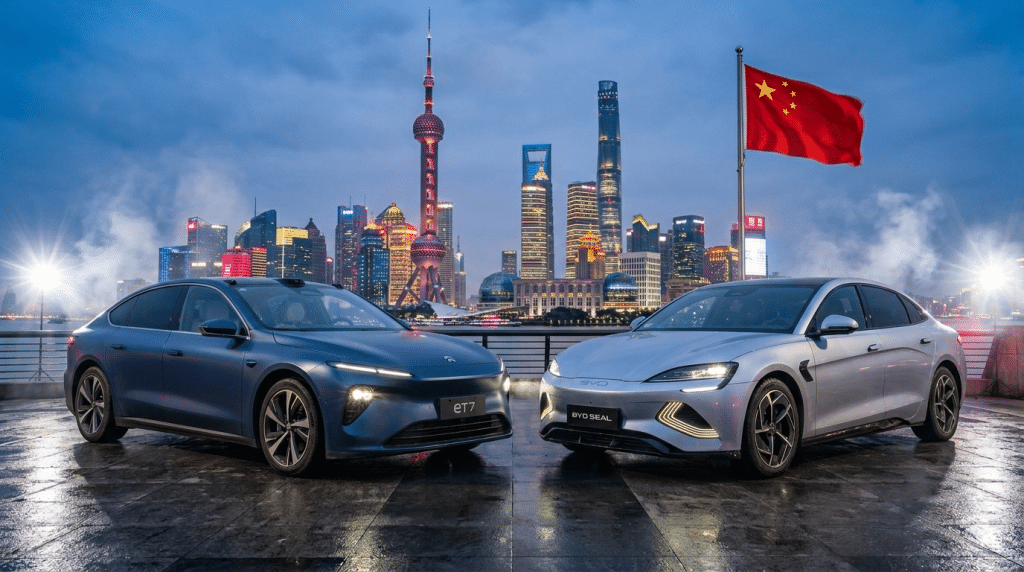
In 2025, more than half of all new passenger cars sold in China were electric. Not a growing share, not a promising trend…More.Than.Half. That’s an adoption rate advocates in the U.S. can only dream about.
According to Automobility’s Global EV Outlook, new energy vehicles accounted for roughly 53% of all new passenger vehicle sales in China that year. China also supplied close to 80% of global EV sales by volume, shipped 2.6 million EVs overseas worth $69.6 billion, and watched BYD overtake Tesla to become the world’s largest electric vehicle manufacturer with over 4.6 million vehicles produced.
If you’ve been reading automotive news lately, you’ve noticed the names: BYD, NIO, XPeng, Aito, Zeekr, Maextro, Omoda. They’re piling up faster than most people can track. Some are brands. Some are sub-brands. Some look independent but actually belong to the same conglomerate that also owns a Swedish luxury marque or a British sports car legend. And then there’s Huawei, a smartphone company that somehow powers five separate car brands without building a single vehicle itself.
This guide cuts through all of it. Here’s what you’ll find:
- A complete map of every major Chinese EV parent company and the brands they own
- Plain-English explanations of what each brand actually does and who it’s for
- The specific areas where Chinese manufacturers have moved ahead of Western competitors
- Where you can actually buy these cars today
- Why Americans still can’t walk into a showroom and buy one
Understanding the Chinese EV Landscape
The Western car industry is relatively legible. Ford owns Ford and Lincoln. Volkswagen Group owns VW, Audi, Porsche, and Skoda. The corporate structures are mostly stable, and the brands have decades of identity behind them.
China’s EV landscape is something else. In 2019, there were roughly 500 Chinese EV manufacturers. By 2023, competition and consolidation had cut that number to around 100, and the shakeout continues. Many brand names that appear independent are sub-brands or joint ventures of a handful of large state-owned or private conglomerates. A car badged as “Denza” is a BYD product. A car badged “Zeekr” comes from the same company that owns Volvo. “Aito” sounds standalone but is built by Seres and runs entirely on Huawei technology.
The sections below group everything by parent company, which is the most useful frame for understanding what you’re looking at. One special case worth flagging upfront: Huawei doesn’t manufacture cars at all. Instead it created an automotive alliance called HIMA (Harmony Intelligent Mobility Alliance), where it provides software, autonomous driving systems, and in-cabin technology while established automakers handle the actual building. Five separate brands operate under that alliance today, and Huawei also licenses its tech to partnerships outside it.
With that framing in mind, here’s who makes what.
BYD Group — The Battery Giant Turned Global EV Powerhouse
BYD stands for “Build Your Dreams,” which sounds like marketing copy until you look at the numbers. Founded in 2003 as the automotive arm of BYD Company — itself born in 1995 as a battery manufacturer — it is now the world’s largest EV maker by volume, surpassing Tesla in 2025 with a global NEV market share of 23.1%. BYD’s passenger lineup runs across two named series: the Dynasty series (Han, Tang, Qin, Song, Yuan, named after Chinese imperial dynasties) and the Ocean series (Seal, Dolphin, Seagull, Sealion, with marine themes). It’s vertically integrated in a way no Western automaker matches — BYD manufactures its own batteries, electric motors, and semiconductors. Its proprietary Blade Battery uses lithium iron phosphate (LFP) chemistry that’s prized for thermal safety and long cycle life. BYD vehicles are currently sold in over 70 countries.
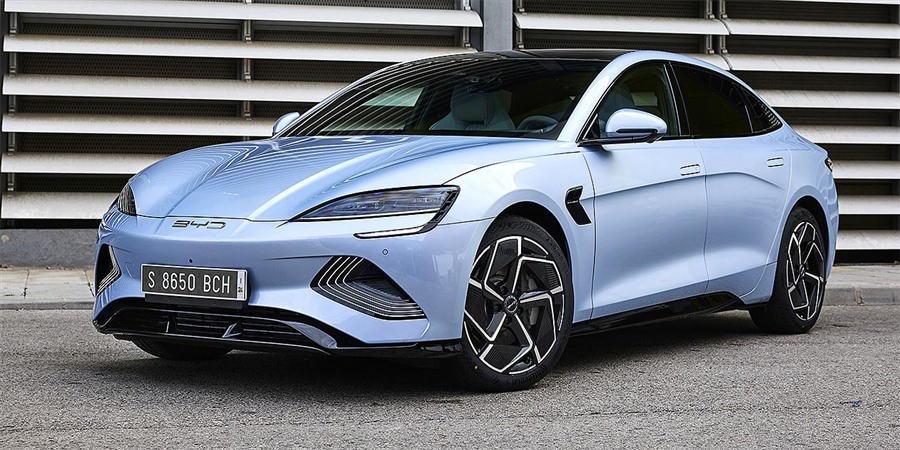
The BYD Seal, part of BYD’s Ocean series. Source
Denza is BYD’s premium brand, and it has an interesting history. It started in 2010 as a 50-50 joint venture between BYD and Daimler AG — the same company that owns Mercedes-Benz. The goal was a joint push into premium Chinese EVs. Sales were modest for years, Mercedes gradually reduced its stake, and in September 2024 it transferred the remaining 10% to BYD, making Denza a fully BYD-owned subsidiary. Today Denza’s lineup includes the D9 luxury MPV, N7 and N9 SUVs, and the Z9 full-size sedan and shooting brake. Denza entered Europe in 2025, launching in Italy, Germany, and France with the Z9 GT — a near-1,000 horsepower electric fastback. In some export markets, Denza also rebadges Fangchengbao models (the B5 and B8) for international sale.
Yangwang is BYD’s ultra-luxury brand, introduced in January 2023. Everything here is priced above 1 million yuan — roughly $140,000 — to compete directly with European luxury badges. The U8 is a large plug-in hybrid SUV that can perform “tank turns” (rotating 360 degrees in place) and float on water using its e4 independent wheel-drive system. The U9 electric supercar broke the world production-car speed record at 496.22 kph. The U7 luxury sedan has a drag coefficient of just 0.195, lower than most sports cars.
Fangchengbao, which translates as “Formula Leopard,” is BYD’s off-road and performance-focused brand, launched in June 2023. It uses a purpose-built body-on-frame platform called DMO (Dual Mode Off-road) rather than adapting existing passenger-car architectures. The Bao 5 mid-size SUV debuted in late 2023 and gathered 10,000 orders in its first three days. The flagship Bao 8 followed in 2024, alongside a compact SUV range (Tai 3, Ti7) and a supercar concept. The brand began recruiting dealerships in 2024 after starting with a direct-to-consumer model.
Linghui is BYD’s commercial vehicle brand, covering electric buses and heavy trucks — less glamorous than the passenger brands but an important part of BYD’s vertically integrated empire.
Geely Group — China’s Most International Automotive Conglomerate
If you want one example of how dramatically Chinese automakers have expanded globally, Geely is it. Li Shufu founded the company in 1986 in Taizhou to make refrigerator parts, moved into motorcycles, then cars, and has since assembled a portfolio that includes Volvo, Polestar, Lotus, Smart (as a joint venture with Mercedes-Benz), the London black cab, a stake in Proton of Malaysia, and even a 17% stake in Aston Martin. In 2025, Geely Holding’s aggregate sales across all brands hit a record 4.1 million units, with electrified vehicles (BEVs, PHEVs, and hybrids) accounting for 56% of that total.
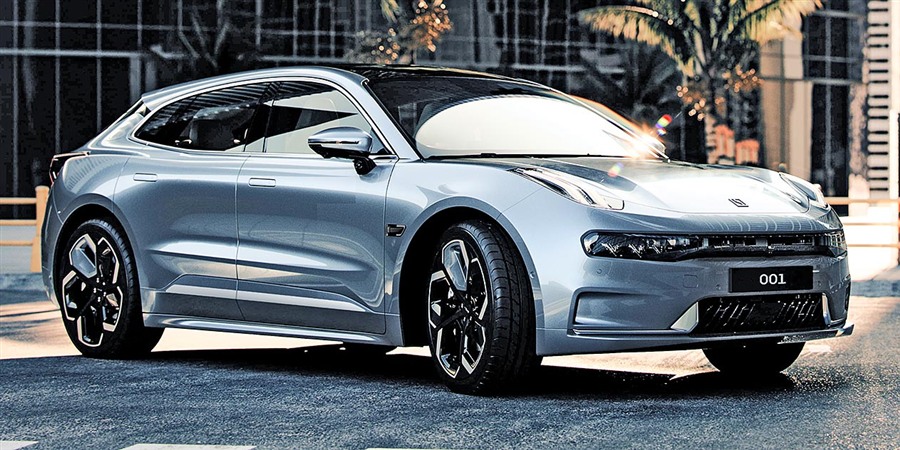
The Zeekr 001, Geely’s premium electric shooting brake. Source
Geely Auto and Galaxy form the core of the group’s domestic Chinese business. Galaxy was established in February 2023 as Geely’s dedicated electrified sub-brand and became an independent brand in March 2025. In 2025 alone, Galaxy sales reached 1.23 million units — exceeding Geely’s own internal target. Galaxy sits in the mass-market segment: affordable, well-equipped, and built to win on value.
Zeekr is where Geely goes premium. Founded in March 2021, Zeekr uses Geely’s Sustainable Experience Architecture (SEA) platform and targets buyers who want a technology-forward luxury EV without paying for a German badge. Zeekr sold 224,133 vehicles in 2025 and completed a New York Stock Exchange IPO in May 2024, raising approximately $441 million. In 2025, Zeekr also absorbed Lynk & Co into its operations as part of a broader Geely group restructuring.
Lynk & Co was established in 2017 as a joint project between Geely Auto and Volvo Cars. It shares platforms and engineering with Volvo, which gives it credibility in both safety and build quality. The brand has a subscription-based ownership model in some European markets that attracted attention for rethinking how people pay for cars. After the 2024 restructuring, Zeekr now holds a 51% majority stake in Lynk & Co. The brand sold 350,495 vehicles globally in 2025.
Smart is a proper comeback story. The original Smart was a Daimler brand best known for tiny city cars. In January 2020, Geely Holding and Mercedes-Benz AG formed a 50-50 joint venture to relaunch Smart as a pure-EV global brand. The new Smart #1 and #3 are designed by Mercedes’ global design team and built on Geely’s SEA platform. They’re genuinely well-received in European markets — the #1 in particular earned solid Euro NCAP scores and sells at a competitive price point.
Radar Auto (marketed as Riddara outside China) is Geely’s electric pickup truck brand. The RD6 model launched in 2022, and by the end of 2023 Radar had captured 61.5% of China’s electric pickup segment. The brand consolidated into Geely Auto in November 2024 and has started exporting to South America.
Lotus needs little introduction as a name, but what it means today is different from its Norfolk-built sports car heritage. Geely now owns it, and Lotus Technology is producing the Eletre — its first electric performance SUV — and the Emeya hyper-GT. Global Lotus sales exceeded 10,000 units in 2024, a company record. The brand is being repositioned as an electric ultra-luxury performance marque.
LEVC (London Electric Vehicle Company) makes the iconic London black cab, now powered by a range-extended electric drivetrain. Geely also operates Farizon for new energy commercial vehicles, and retains a significant stake in Proton of Malaysia, which is increasingly adopting Geely platforms.
SAIC Motor — The State-Backed Giant with Global Reach
Founded in 1955, SAIC Motor is the largest of China’s “Big Four” state-owned automakers, with car sales of 5.37 million units in 2021. Its international significance comes partly from joint ventures with Volkswagen and General Motors, and partly from reviving one of Britain’s most loved car brands.
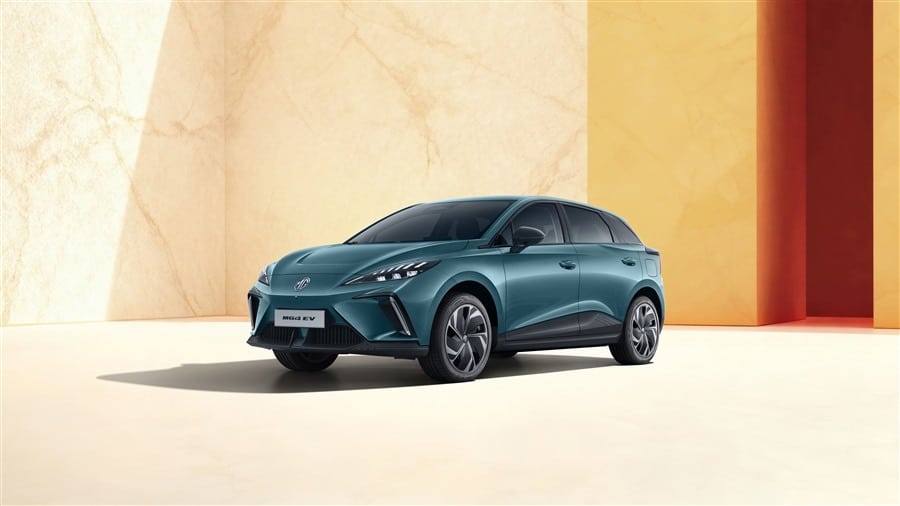
The MG4 EV, SAIC’s global volume flagship. MG Motor Europe image, free for editorial purposes. Source
MG (Morris Garages) is the most internationally recognizable Chinese-owned brand on the market. SAIC acquired the dormant British marque and turned it into a global EV operation. The MG4 EV is a genuine bestseller in Europe and the UK — it carries a 5-star Euro NCAP rating, offers competitive pricing, and is backed by a dealer network of over 150 locations in the UK alone. MG also produces the MG5 estate, the ZS EV crossover, and the Cyberster electric roadster.
Wuling operates through the SAIC-GM-Wuling (SGMW) joint venture, which also includes General Motors. It produces the Wuling Hongguang Mini EV — a tiny city car that became one of the best-selling EVs in the world by asking a very simple question: what if a usable electric car cost about $5,000? In China, the answer is a waiting list. In 2024, Wuling sold over 1.5 million vehicles, more than half of them new energy vehicles. Baojun is a sister brand from the same SGMW joint venture, focused on affordable EVs and city crossovers including the Yep mini SUV.
Roewe is SAIC’s domestic-market passenger car brand, with a range of NEVs covering EVs and plug-in hybrids for Chinese buyers.
IM Motors (Zhiji Motor) is SAIC’s premium EV play, built in partnership with Alibaba and Zhangjiang Hi-Tech. Its L7 sedan and LS6/LS7 SUVs target technology-minded buyers who want a software-rich premium experience. The brand has begun cautious international expansion, including a launch in Portugal.
Maxus handles SAIC’s commercial vehicle business: electric vans, MPVs, and the eDeliver series aimed at fleet operators. In markets like the UK and Australia, Maxus LDV vans are reasonably well established. Rising Auto is another SAIC-backed brand, currently China-focused with the F7 and R7 models.
GAC Group — The Southern Powerhouse
Guangzhou Automobile Group (GAC) was founded in 1954 and sits as the fifth-largest automaker in China with 2.14 million sales in 2021. It runs joint ventures with both Toyota and Honda, and its own brands have grown significantly.
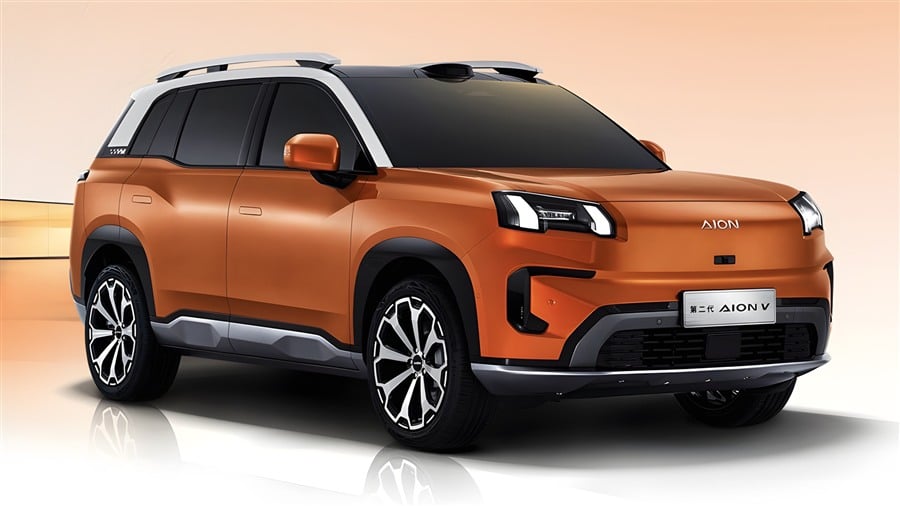
The GAC Aion V, a rugged smart electric SUV from GAC’s dedicated EV division. Source
GAC Aion is GAC’s dedicated EV division and one of the volume leaders in China’s domestic EV market. Aion concentrates on affordable but spacious EVs and crossovers — the kind of practical family vehicles that move in large numbers. It sold roughly 375,000 units in 2024 and has opened a new plant in Thailand to serve Southeast Asian demand.
Trumpchi is GAC’s mainstream passenger car and SUV brand, progressively adding electrified powertrains across a lineup that spans sedans, crossovers, and larger SUVs.
Great Wall Motor — SUVs, Off-Roaders, and Retro Charm
Great Wall Motor (GWM) has been building vehicles since 1984 and is China’s leading private SUV and pickup manufacturer. With 1.28 million sales in 2021, it runs a clearly structured multi-brand lineup where each badge occupies a distinct lane.
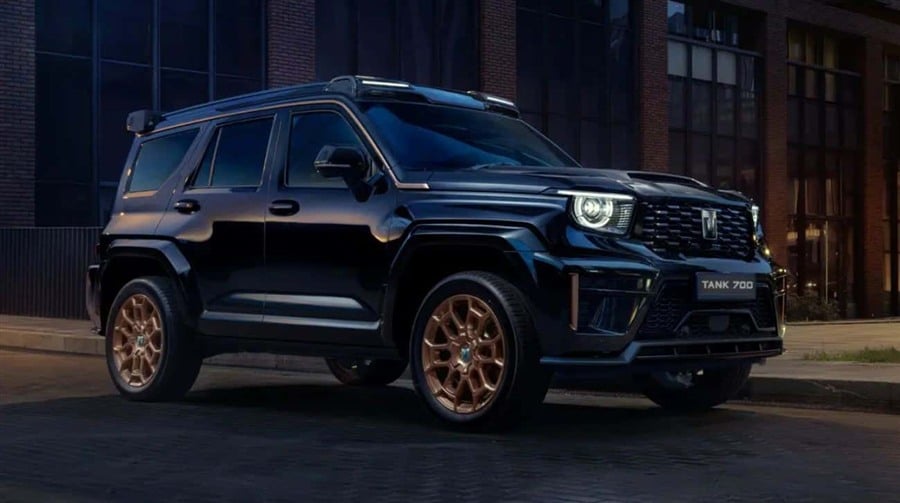
The GWM Tank 700 Hi4-T, a luxury off-road SUV with hybrid powertrain. Source
Ora is GWM’s dedicated affordable EV brand, built entirely around design personality. The Funky Cat (sold in China as the Good Cat) and Ballet Cat have rounded, cartoonish bodywork that deliberately stands out in a sea of sleek crossovers. They target younger urban buyers who want something with character. Ora has expanded into parts of Europe, where the Funky Cat’s retro styling has found a small but enthusiastic audience.
Tank takes the opposite approach — serious off-road body-on-frame SUVs with powerful hybrid and PHEV drivetrains. The Tank 300, 400, and 500 are aimed at buyers who want Jeep Wrangler-style capability but with electrified efficiency. Tank has been expanding into export markets across the Middle East and Southeast Asia.
Haval is GWM’s core mass-market SUV brand, the steady commercial engine of the group, adding hybrid and PHEV options to mainstream models.
Wey is GWM’s premium SUV brand, concentrating on high-end PHEVs with long electric ranges. The Coffee series (Latte, Mocha) has positioned Wey at the intersection of tech and comfort for buyers willing to spend more.
Chery Group — The Quiet Export Champion
Chery has been one of China’s biggest car exporters for years without generating much Western press coverage. Founded in 1997 as a state-owned enterprise, it’s now pushing hard into global markets with purpose-built international brands.
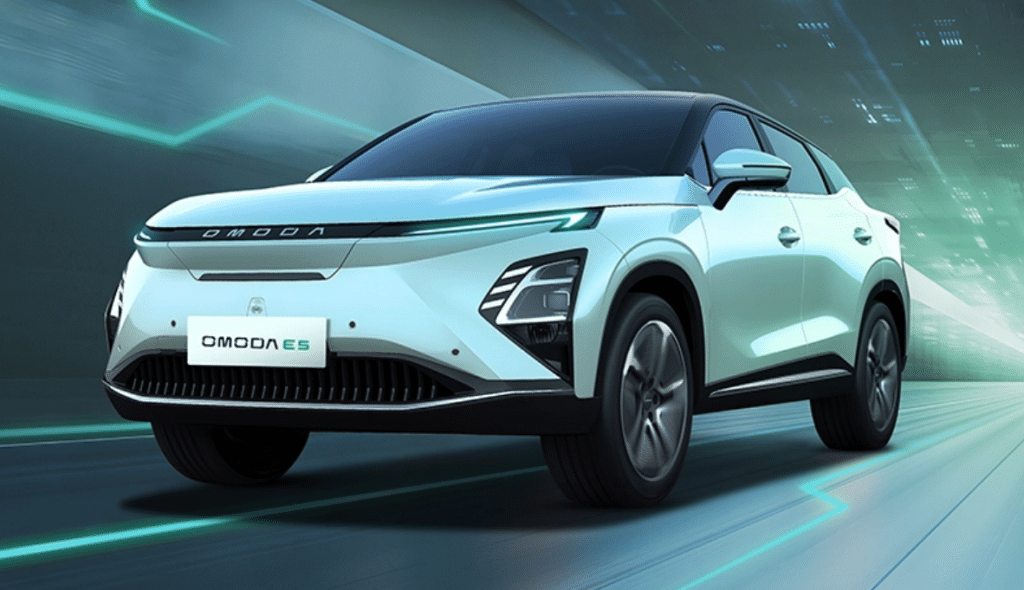
Omoda is Chery’s primary international export brand: stylish mid-size SUVs designed with European aesthetics in mind. The Omoda E5 has made a significant impact in UK and European markets, where its combination of equipment levels and price has attracted buyers moving away from traditional options.
Jaecoo is a sister brand to Omoda under the same Chery umbrella, targeting family and fleet buyers with more rugged SUV styling. In the UK, the Jaecoo E5 topped salary sacrifice order charts in Q4 2025 — just months after launch.
Exeed and Sterra form Chery’s premium tier: higher-end EVs and range-extended vehicles, including the Sterra ES sedan and ET SUV.
iCar is a newer Chery EV brand aimed at younger buyers, with boxy, unconventional designs like the iCar 03 that deliberately avoid the smooth crossover template most Chinese EVs follow.
Huawei’s HIMA Alliance — A Tech Company That Powers Five Car Brands
This one requires a short explanation before diving into the brands.
Huawei is a technology company. It makes smartphones, networking equipment, and enterprise software. It doesn’t have a factory floor stamping out car bodies. What it has is the Harmony Intelligent Mobility Alliance (HIMA), an automotive partnership framework it created in 2023. Huawei provides what it’s good at — HarmonyOS smart cabin software, autonomous driving systems (ADS), intelligent lighting, connectivity, and electric-drive components — while established automakers handle manufacturing. HIMA hit one million cumulative deliveries in just 43 months after its first vehicle launched. The alliance’s average transaction price sits at approximately 390,000 yuan (around $54,000), firmly in the premium tier.
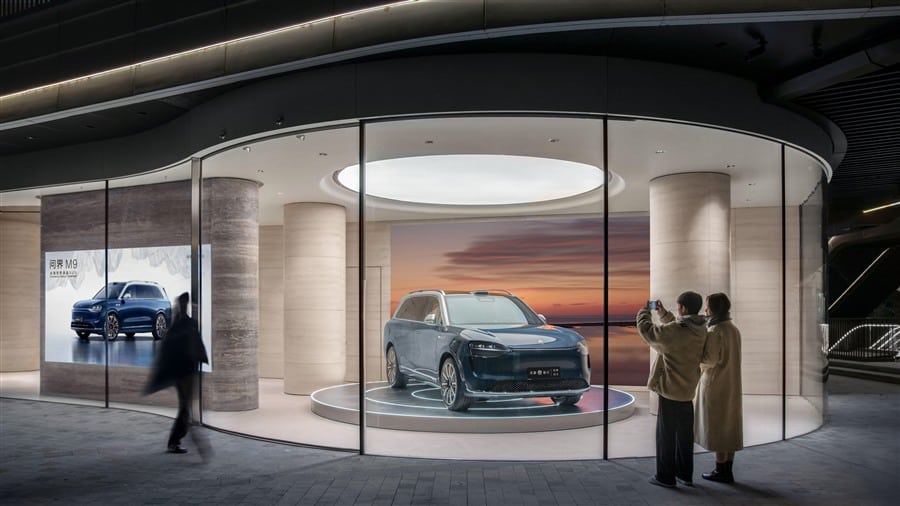
The Aito M9, flagship of Huawei’s HIMA alliance. Image credit: Huawei. Source
Five brands currently operate under HIMA:
Aito (built by Seres Group) is the oldest and most successful. Its SUV lineup — M5, M7, M8, M9 — has collectively racked up extraordinary numbers in China’s luxury segment. The M9 flagship starts at around 480,000 yuan ($67,000) and has surpassed 280,000 cumulative deliveries while consistently outselling German rivals in its price bracket. Total Aito deliveries across HIMA reached 589,107 units in 2025 alone.
Luxeed (Chery + Huawei) targets the tech-forward buyer who wants software depth in a sleek sedan or coupe-SUV rather than an SUV. The S7 mid-size sedan and R7 mid-size coupe SUV run HarmonyOS cockpit and Huawei’s ADS driving features. Luxeed delivered 90,493 units through HIMA in 2025.
Stelato (BAIC BluePark + Huawei) sits at the executive sedan end of the range. The S9 full-size sedan launched in 2024 at 399,800 yuan ($55,000) and has since been joined by an extended-range variant and a station wagon version (S9T). Stelato is Huawei’s answer to the BMW 7 Series and Mercedes S-Class in China’s luxury sedan market.
Maextro (JAC Group + Huawei) is where the alliance goes genuinely ultra-luxury. The S800 full-size sedan starts at 708,000 yuan — just under $100,000 — and the top configuration with Huawei’s newest 896-channel LiDAR reaches 728,000 yuan. It is explicitly benchmarked against Rolls-Royce, Maybach, and Bentley by the people who made it. Between September 2025 and January 2026, the S800’s insurance registrations in China exceeded those of both the Porsche Panamera and the Mercedes-Benz S-Class. An SUV and MPV (the V800) are coming in 2026.
Shangjie (SAIC + Huawei) is the newest and most affordable brand in the alliance, established in April 2025. The H5 mid-size SUV starts at just 159,800 yuan ($22,000) — Huawei’s software ecosystem at mass-market prices. Shangjie is how HIMA reaches buyers who can’t stretch to an Aito M9 but still want the Harmony experience.
The Independent “New EV” Trio — China’s Tesla Challengers
Three brands operate outside any major conglomerate structure. They’re often called the “new EV trio” and were initially positioned as China’s answer to Tesla.
NIO was founded in 2014 and occupies the premium end of the market with sedans (ET5, ET7) and SUVs (ES6, ES8, EC6). Its defining innovation is battery swapping: pull into a NIO swap station, and automated systems replace your depleted battery with a fully charged one in under five minutes. No cables, no waiting. As of early 2026, NIO is building out its swap station network across Europe, with stations already operational in Germany, the Netherlands, and Norway. To reach a broader audience, NIO launched two sub-brands: Onvo for mainstream family buyers (the L60 crossover competes directly with the Tesla Model Y) and Firefly for small, affordable city EVs.
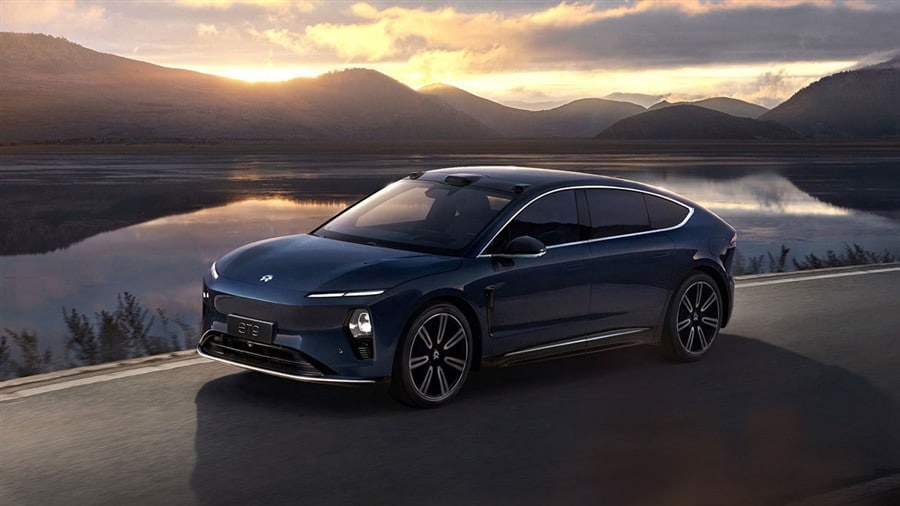
The NIO ET9 executive flagship sedan. Source
XPeng (also written XPENG) was also founded in 2014 and has built its identity around autonomous driving software. Its XPILOT system covers advanced highway driving and automated parking — genuinely competitive with anything Tesla offers in those categories. The G6 coupe-SUV features an 800-volt electrical architecture enabling up to 280kW DC fast charging, making it one of the fastest-charging Chinese EVs you can buy. The more affordable Mona M03 sedan targets younger buyers with strong value. XPeng is expanding internationally and has a technology partnership with Volkswagen.
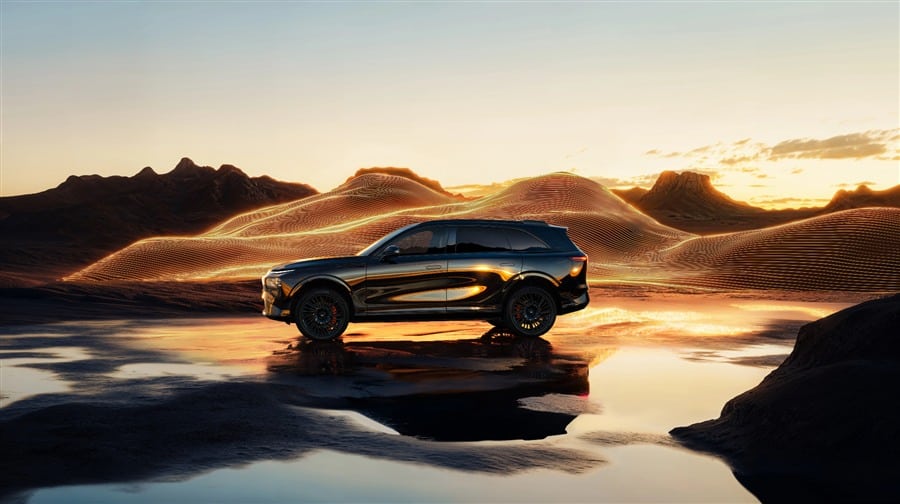
The XPeng G9 flagship smart SUV with 800V architecture. Source
Li Auto launched in 2015 and cracked the Chinese family SUV market with a clever product insight: Chinese families taking long road trips don’t fully trust pure battery range, so Li built extended-range electric vehicles (EREVs) that carry a small gasoline generator to eliminate anxiety. The strategy worked spectacularly. In 2024, Li Auto sold approximately half a million SUVs in China alone — a number that would be remarkable for a company of any age. The brand is now moving into pure BEV models, with the Li Mega MPV as its first step.
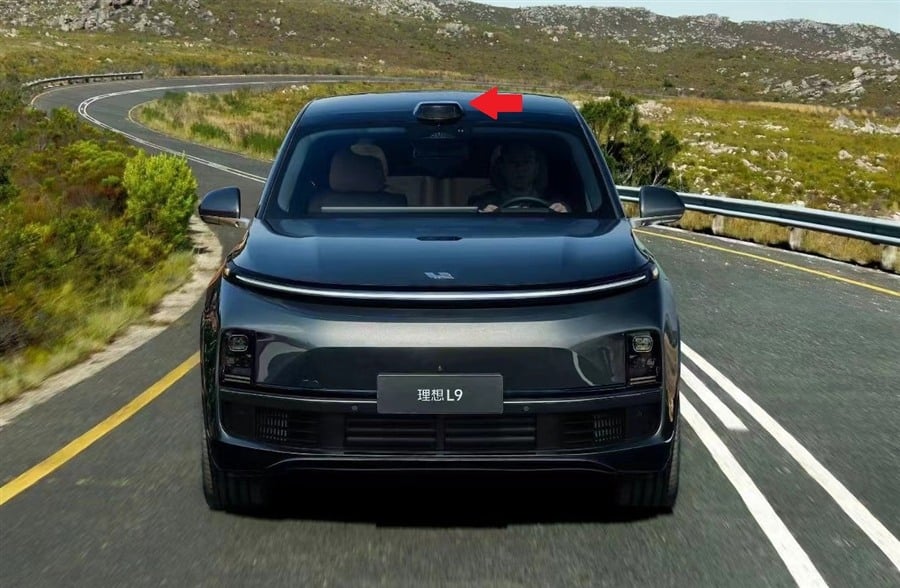
The Li Auto L9, a full-size flagship smart SUV with extended-range powertrain. Source
Tech Giants and New Entrants
Xiaomi — yes, the smartphone company — entered the car industry in 2024 with the SU7 sedan. It looks like a Porsche Taycan (with a little of the 911 in the nose), drives well, runs HyperOS (Xiaomi’s unified operating system across phones, tablets, and smart home devices), and was priced aggressively enough to create a waiting list the moment orders opened. The YU7 SUV followed. Xiaomi’s advantage isn’t automotive heritage; it’s an existing ecosystem of 650 million active device users who already live inside its software world. Getting into a Xiaomi car feels like getting into a very large version of their phone.
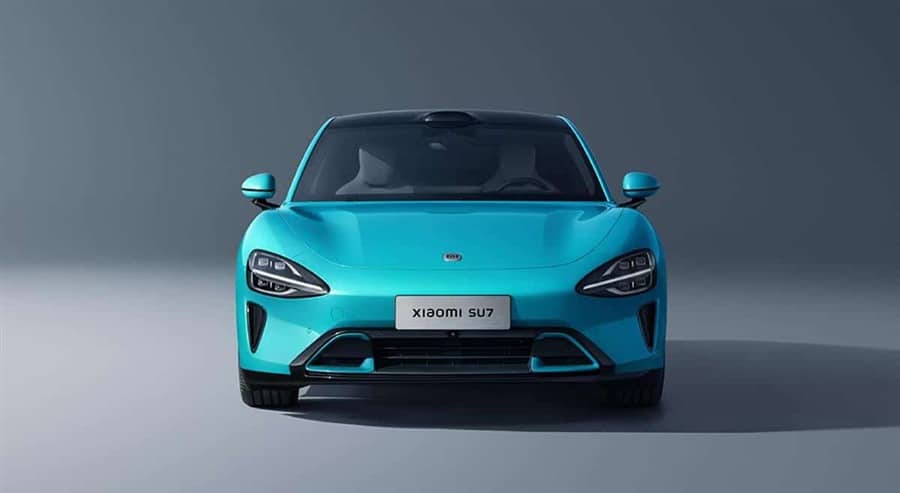
The Xiaomi SU7 electric sedan in bright blue. Source
The State-Owned Giants — FAW and Dongfeng
The “Big Four” Chinese state automakers — SAIC, FAW, Dongfeng, and Changan — each carry decades of history and government backing. Two of them have particularly notable EV efforts that don’t get enough attention in Western coverage.
FAW Group (First Automobile Works) was founded in 1953 and is one of China’s oldest and most symbolically significant manufacturers. Its most distinctive EV brand is Hongqi (Red Flag), a nameplate that has been used to transport Chinese heads of state for decades. Hongqi is now electrifying — the E-HS9 SUV and E-QM5 sedan carry that state-prestige heritage into battery-electric territory. Think of it as China’s version of launching an electric Rolls-Royce. FAW also operates Bestune for mainstream EVs and PHEVs.
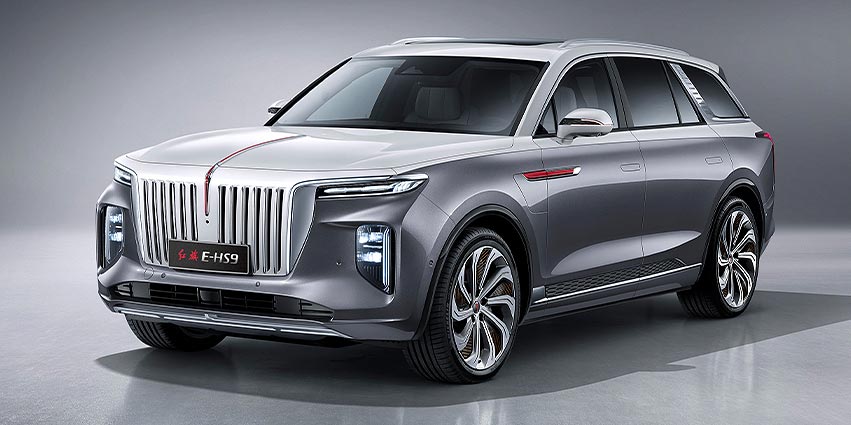
The Hongqi E-HS9, FAW’s full-size luxury electric SUV that carries state-prestige heritage. Source
Dongfeng Motor Corporation runs joint ventures with Nissan, Honda, and Stellantis. Its EV star is Voyah, a luxury EV brand offering high-end SUVs and MPVs with premium interiors and intelligent driving features. Voyah has already launched in Norway, making it one of the few Chinese luxury EV brands with a live European sales operation. Dongfeng also markets more affordable NEVs under the Forthing and Aeolus names.
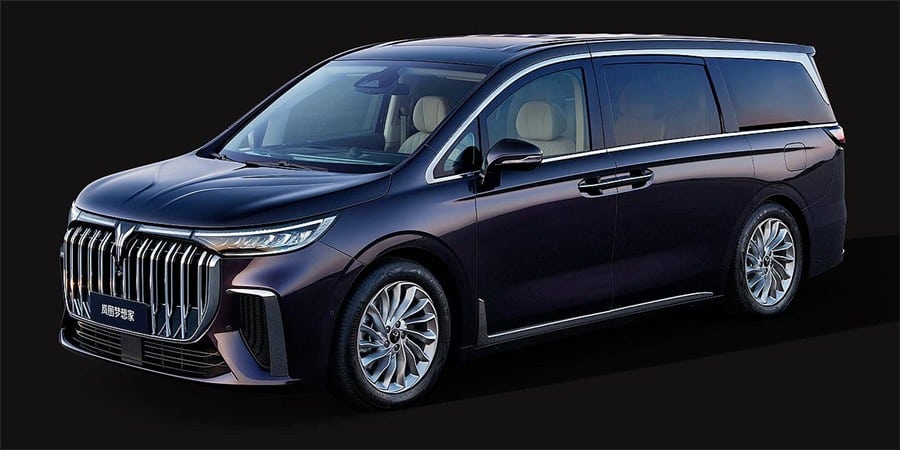
The Voyah Dreamer, Dongfeng’s luxury electric MPV with premium interiors and intelligent driving features. Source
Changan, BAIC, and the Avatr Question
Changan Automobile traces its roots to 1862 — originally an arms manufacturer for the Qing dynasty, later a state automaker. It runs joint ventures with Ford and Mazda alongside its own brands. For mass-market EVs, Deepal is Changan’s vehicle, offering well-priced electrified sedans and crossovers. But the more interesting story is Avatr.
Avatr is a premium EV brand built as a three-way joint venture between Changan, Huawei, and CATL. It uses Huawei’s HarmonyOS cabin software and intelligent driving systems — but it is not part of Huawei’s HIMA alliance. This distinction matters: HIMA brands are sold through Huawei’s own retail network, while Avatr operates independently with Changan as the primary partner. Avatr’s 11 SUV and 12 sedan are sleek, futuristic, and positioned against NIO and Tesla in the premium segment. The three-way partnership — a traditional automaker, a tech giant, and the world’s largest battery maker — is one of the more unusual corporate arrangements in any industry.
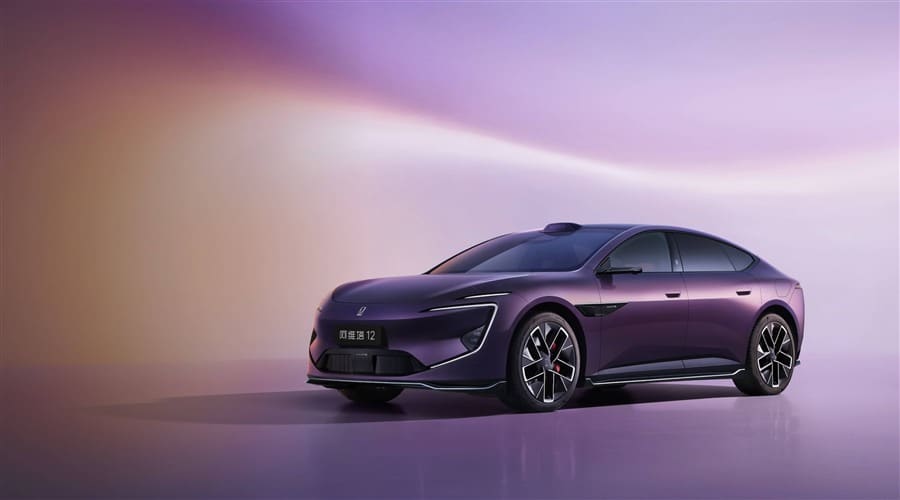
The Avatr 12, a futuristic luxury gran coupe from the Changan-Huawei-CATL joint venture. Source
BAIC Group (Beijing Automotive Industry Holding) has joint ventures with Mercedes-Benz and Hyundai. Its own premium EV brand is Arcfox, which produces technically sophisticated models like the Alpha S and Alpha T. Separately — and this is where it gets slightly complicated — BAIC’s BluePark subsidiary is also a manufacturing partner in Huawei’s HIMA alliance, producing the Stelato brand. So BAIC simultaneously runs its own independent premium EV brand (Arcfox) and supplies manufacturing capability for a Huawei-branded product (Stelato).
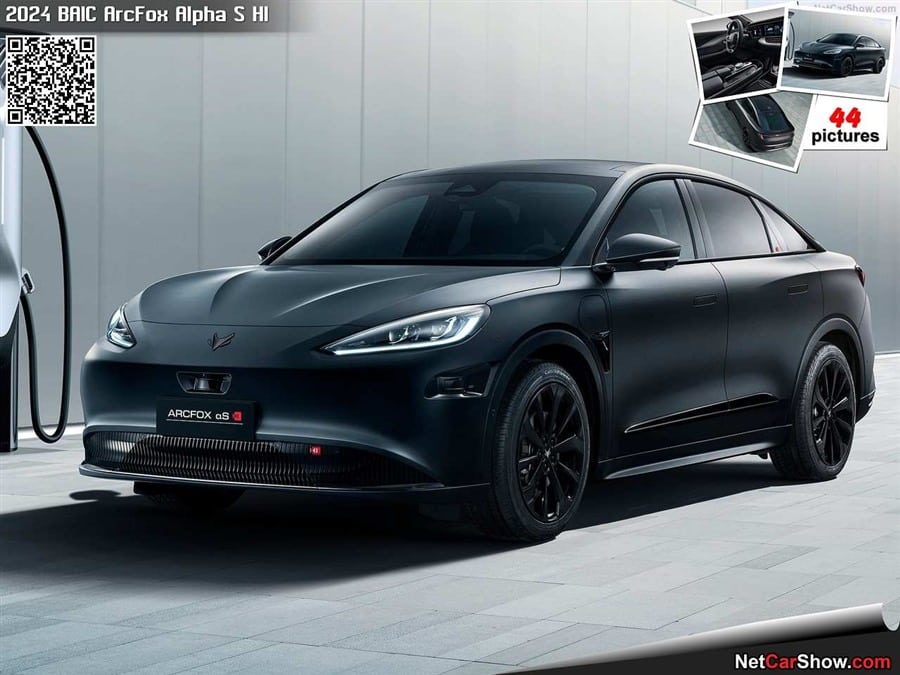
The Arcfox Alpha S HI, BAIC’s premium electric sedan with Huawei’s full-stack smart car solution. Source
Where Chinese EVs Show Up Around the World
The picture looks very different depending on where you live.
Europe and the UK are the most active export markets. MG is deeply established in both regions. BYD, XPeng, NIO, Omoda, Jaecoo, Leapmotor (backed by Stellantis), and Geely’s own EX5 are all present or expanding. The EU imposed additional tariffs of 7.8% to 35.3% on Chinese-made EVs in late 2024, on top of the existing 10% base rate. Those tariffs have slowed some brands and pushed others toward building local production (BYD is building a factory in Hungary; Leapmotor already produces in Poland via Stellantis). The UK has not introduced equivalent tariffs, which is one reason Chinese brands have taken nearly 10% of UK new car registrations and over 12% of electric car sales.
Southeast Asia is another major battleground. BYD, Aion, Wuling, MG, and Chery have all expanded aggressively across Thailand, Indonesia, Malaysia, and the Philippines, where Chinese EVs are directly undercutting the Japanese brands that have dominated those markets for decades.
Middle East and Latin America are growing fast. Mexico saw a 2,367% year-on-year increase in Chinese EV imports in November 2025 alone, driven largely by BYD launching affordable models in the country. Brazil and Chile have also become significant markets.
Australia and New Zealand have well-established MG, BYD, and LDV (Maxus) presences, with Omoda and Jaecoo arriving more recently.
Norway is an outlier in the European picture. Thanks to its extraordinary EV adoption policies — EVs have hit 96% of new car sales there — Chinese brands get more of a hearing. NIO, XPeng, and Voyah all have operations there.
United States: effectively closed. A 100% tariff on Chinese-built EVs has blocked almost all direct imports. American consumers do encounter Chinese-built vehicles, but through Western badges — the Tesla Model 3 and Model Y are made in Shanghai, and the Volvo EX30 and Polestar models are also Chinese-manufactured. The trade situation is fluid: in May 2026, President Trump met with Xi Jinping in Beijing, and the automotive industry is watching carefully for any movement on tariffs.
Where Chinese EV Companies Are Ahead of the West
This is the section that tends to make Western automotive executives uncomfortable, because the lead isn’t marginal in some areas — it’s structural.
Battery technology and cost is the clearest example. China is home to six of the world’s ten largest battery manufacturers. CATL (Contemporary Amperex Technology Co.) holds a 39.2% global EV battery market share; BYD holds 16.4%. Together they control over 55% of the global market. BYD’s Blade Battery uses lithium iron phosphate chemistry that resists thermal runaway, degrades more slowly through charge cycles, and avoids cobalt entirely. CATL’s second-generation Shenxing battery can add 520 km of range with a five-minute charge and reaches 5-80% in 15 minutes even in cold weather. BYD’s Super e-Platform allows adding 400 km of range in five minutes using 1,000 kW charging. The cost gap is equally striking: LFP battery cells cost roughly $48-55 per kWh in China, compared to $72-85/kWh in Europe and $78-92/kWh in North America.
Vertical integration explains much of BYD’s cost advantage. It’s the only major automaker that manufactures its own batteries, electric motors, semiconductors, and electronic control systems at scale. When global nickel prices spiked, BYD’s LFP focus became a structural advantage. When supply chains seized up during the pandemic, BYD had less exposure than manufacturers relying on dozens of separate suppliers.
Software and smart features arrive standard on Chinese EVs in ways that cost extra elsewhere. Panoramic cameras, 360-degree parking views, over-the-air updates, heated and ventilated seats, large rotating touchscreens, and AI-powered voice assistants tend to be base-spec rather than premium options. Huawei’s HarmonyOS cabin and ADS system are genuinely class-leading. NIO’s NOMI AI assistant and XPeng’s XPILOT autonomous driving stack are pushing real-world autonomous capability further and faster than most Western competitors.
Product development pace is harder to quantify but consistently remarked upon. Chinese EV brands regularly take a model from concept to market in 18-24 months. European and American automakers typically need three to five years. This matters for iteration: problems get fixed and improvements get deployed in the next model year, not the next generation.
Manufacturing speed is a specific edge that compounds the above. Building a new EV factory in China takes roughly 14-18 months on average. In Europe, the same process takes 28-36 months. In North America, closer to 30-42 months. BYD scaled its Chinese production capacity from approximately 3 million to 4.8 million units in a single year.
CATL as hidden infrastructure: even if you’ve never bought a Chinese-branded car, you may already be using Chinese battery technology. CATL supplies batteries to Tesla, BMW, Mercedes-Benz, Volkswagen, Stellantis, Volvo, and Ford. In 2025, CATL’s battery installations outside China reached 138.8 GWh with a 30% share of the non-Chinese market. Chinese battery dominance isn’t a future scenario — it’s already the operating reality for much of the Western auto industry.
Why Chinese EVs Are Still Not in US Showrooms
The United States currently imposes a 100% tariff on Chinese-built electric vehicles. That tariff was quadrupled from 25% under the Biden administration in 2024, and it effectively prices most Chinese EVs out of the American market before a single dollar is spent on marketing or distribution.
The politics behind it are layered. Congress and US automakers are broadly aligned in keeping Chinese vehicles off American roads, with concerns centered on data privacy (Chinese cars collect driving and location data, and some lawmakers worry about where it goes), supply chain security (relying on Chinese components for national transportation infrastructure), and protecting domestic manufacturing jobs. None of those concerns is trivial.
Some Chinese companies are exploring workarounds. BYD has announced manufacturing facilities in Mexico, Brazil, Hungary, and Thailand. But building a vehicle in Mexico for US import only sidesteps the Chinese-origin tariff if enough content is locally sourced — a complex calculation under current trade rules.
The political situation can shift. In May 2026, President Trump traveled to Beijing for meetings with Xi Jinping, and the auto industry was watching closely for any signal about tariff adjustments. Nothing was announced publicly at the time of writing, but the tone of those discussions will shape whether Chinese EVs enter US showrooms in the next few years.
In the meantime, Americans do encounter Chinese automotive manufacturing daily — just not with Chinese badges. The Tesla Model 3 and Model Y sold across North America are produced at Gigafactory Shanghai. Volvo’s EX30 and multiple Polestar models are manufactured in China. You’re driving Chinese manufacturing; you just don’t see a Chinese brand on the grille.
Frequently Asked Questions
Who is the biggest EV company in China?
BYD is by a wide margin. It produced over 4.6 million vehicles in 2025 and surpassed Tesla to become the world’s largest EV manufacturer by volume, with a global NEV market share of 23.1%. The second and third biggest Chinese EV groups by overall sales — Geely and SAIC — are also enormous, but their individual EV brands don’t approach BYD’s scale.
What’s the difference between BYD and NIO?
BYD is a vertically integrated manufacturer that covers the full range from $10,000 city cars to $140,000 ultra-luxury vehicles. It makes its own batteries, motors, and chips. NIO is a premium-only brand known for battery swapping, minimalist design, and a software-defined ownership experience closer to what a tech subscription feels like than a traditional car purchase. NIO’s positioning is closer to Tesla; BYD’s breadth is closer to Toyota.
How does Huawei sell cars if it doesn’t build them?
Huawei created the Harmony Intelligent Mobility Alliance (HIMA), where it provides software, autonomous driving systems, smart cabin technology, and sales network infrastructure while established automakers handle manufacturing. Five brands currently operate this way: Aito (Seres), Luxeed (Chery), Stelato (BAIC), Maextro (JAC), and Shangjie (SAIC). Huawei also licenses its technology independently to non-HIMA partnerships — Avatr, the Changan-Huawei-CATL joint venture, uses Huawei tech but operates completely outside the HIMA structure.
Why can’t Americans buy BYD or NIO?
US tariffs on Chinese-built EVs currently sit at 100%, which effectively doubles the price of any imported vehicle and makes them uncompetitive. Chinese-built cars do reach American consumers, but wearing Western badges: Tesla’s Shanghai factory produces cars exported globally, including to North America, and Volvo and Polestar models are also manufactured in China.
Is BYD better than Tesla?
It depends what “better” means to you. BYD sells more vehicles globally and covers far more price points. Tesla leads in Supercharger network coverage, brand recognition outside China, and its AI and robotics ambitions. Both brands have earned 5-star Euro NCAP ratings on multiple models. BYD’s structural advantage is cost and vertical integration. Tesla’s structural advantage is charging infrastructure and software ecosystem in Western markets.
Which Chinese EV brands are available in Europe?
MG is the most established, with hundreds of dealerships across the UK and continent. BYD, NIO, XPeng, Omoda, Jaecoo, Leapmotor, Geely EX5, and Smart are all present or actively expanding. EU tariffs imposed in late 2024 have complicated the picture for some brands, but haven’t stopped the overall inflow.
What’s the cheapest Chinese EV you can buy?
In China, the Wuling Hongguang Mini EV starts at around $5,000. In export markets, the BYD Dolphin Surf is among the most accessible, starting from approximately £18,650 in the UK. In the UK specifically, salary sacrifice schemes can bring that down to around £150 per month net for a 40% taxpayer.
What is CATL and why does it matter?
CATL — Contemporary Amperex Technology Co. Limited — is the world’s largest EV battery manufacturer, with a 39.2% global market share in 2025. It supplies batteries to Tesla, BMW, Mercedes-Benz, Volkswagen, Ford, and Volvo, among others. Even if you’ve never bought a car with a Chinese badge, there’s a reasonable chance your current EV has a CATL battery inside it. Chinese battery dominance is not a future risk for Western automakers; it’s a present reality they’re already working around.
The scale of what has happened in Chinese electric vehicles over the past decade is genuinely difficult to absorb at once. A country that was largely a follower in automotive technology in the early 2000s now sets global benchmarks on battery chemistry, fast charging, in-car software, and manufacturing speed. The brands covered here aren’t all equally significant for every reader — if you’re in the US, BYD is mostly a news story right now; if you’re in the UK or Europe, you can walk into a showroom today and buy a Zeekr, an MG, or an Omoda. But regardless of where you are, the technology coming out of these companies is shaping what every car — Chinese, European, American, Japanese — is going to look like over the next decade. That’s worth understanding.



Leave a Comment
You must be logged in to post a comment.