
You’ve probably seen one at a hardware store, sitting next to the shop tools with its bulky tank and wide hose. Or maybe a friend pulled one out after a basement flood and cleaned up in minutes. Either way, if you’re asking yourself “what is a wet dry vacuum and do I actually need one?”, you’re in the right place.
A wet dry vacuum is a cleaning machine built to handle both liquid spills and dry debris using a single device. Unlike a standard household vacuum, it won’t get damaged if you suck up water. That one difference opens up a surprisingly wide range of uses, from soaking up a broken pipe to clearing sawdust after a weekend project.
According to DataIntelo, the global wet and dry vacuum cleaner market was valued at $5.8 billion in 2025 and is on track to reach $9.6 billion by 2034. More and more households are discovering what these machines can do.
This guide covers everything you need to know: how they work, what they’re good for, their real downsides, and how to figure out if one belongs in your home.
What Is a Wet Dry Vacuum?
A wet dry vacuum is a heavy-duty suction device with a waterproof collection tank, designed to pick up both liquids and solids without damaging the motor. The “wet” part means it can safely vacuum standing water, spills, and muddy messes. The “dry” part means it handles dust, debris, leaves, and larger particles just as well.
They’re sometimes called shop vacs because they’re a staple in garages and workshops, but the category has grown significantly and now includes two distinct types.
The Two Types You Should Know
This is where a lot of buying guides go wrong by lumping everything together. There are actually two pretty different kinds of wet dry vacuums:
| Type | What it is | Best for |
|---|---|---|
| Traditional shop vac | Large canister with tank, motor, and hose | Garages, workshops, floods, heavy debris |
| Floor-washer combo | Upright or handheld, vacuums and wet-scrubs simultaneously | Hard floor cleaning, everyday home use |
Traditional shop vacs are the original. They’re built from hard plastic or stainless steel, hold anywhere from 2 to 20 gallons, and produce serious suction. They’re what most people picture when they hear “wet dry vacuum.” You’d use one to suck water out of a flooded basement, clean up drywall dust after renovations, or clear debris from a garage floor.
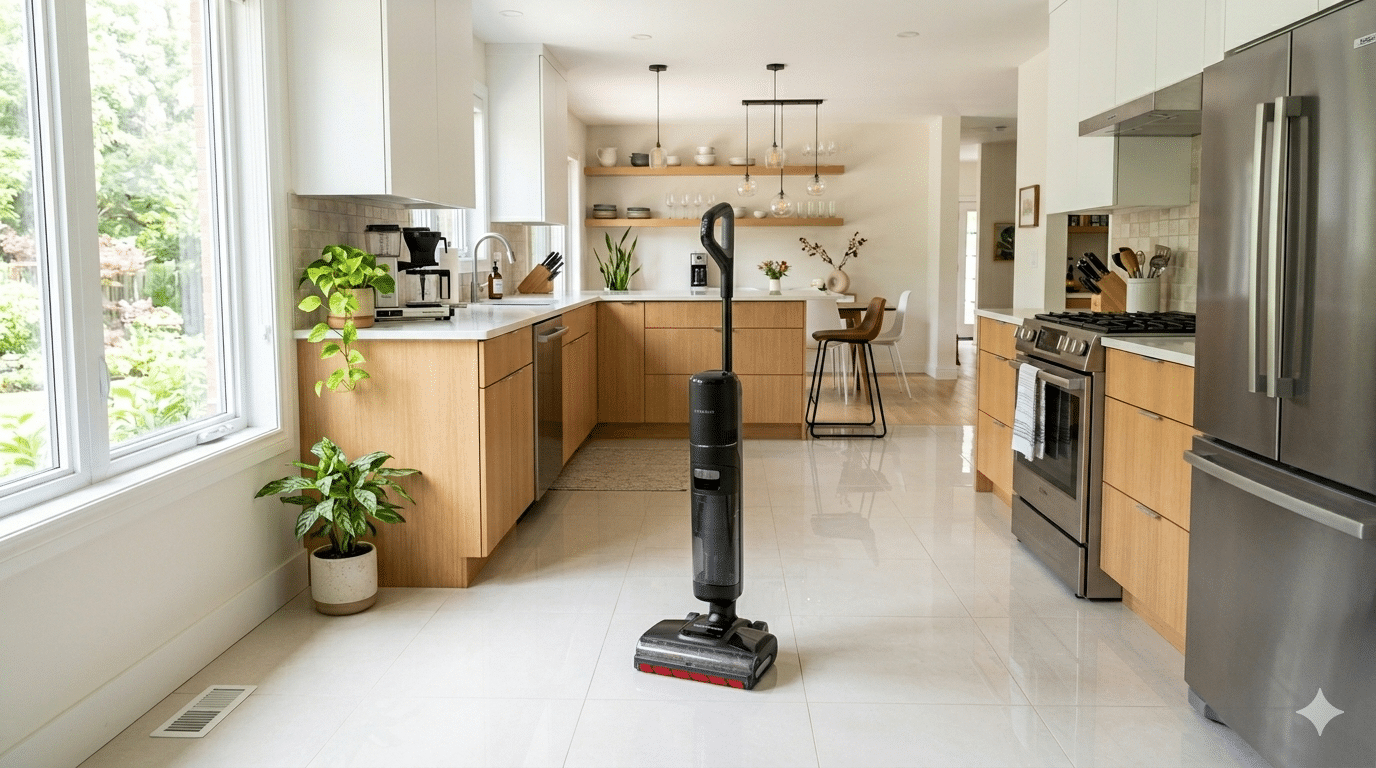
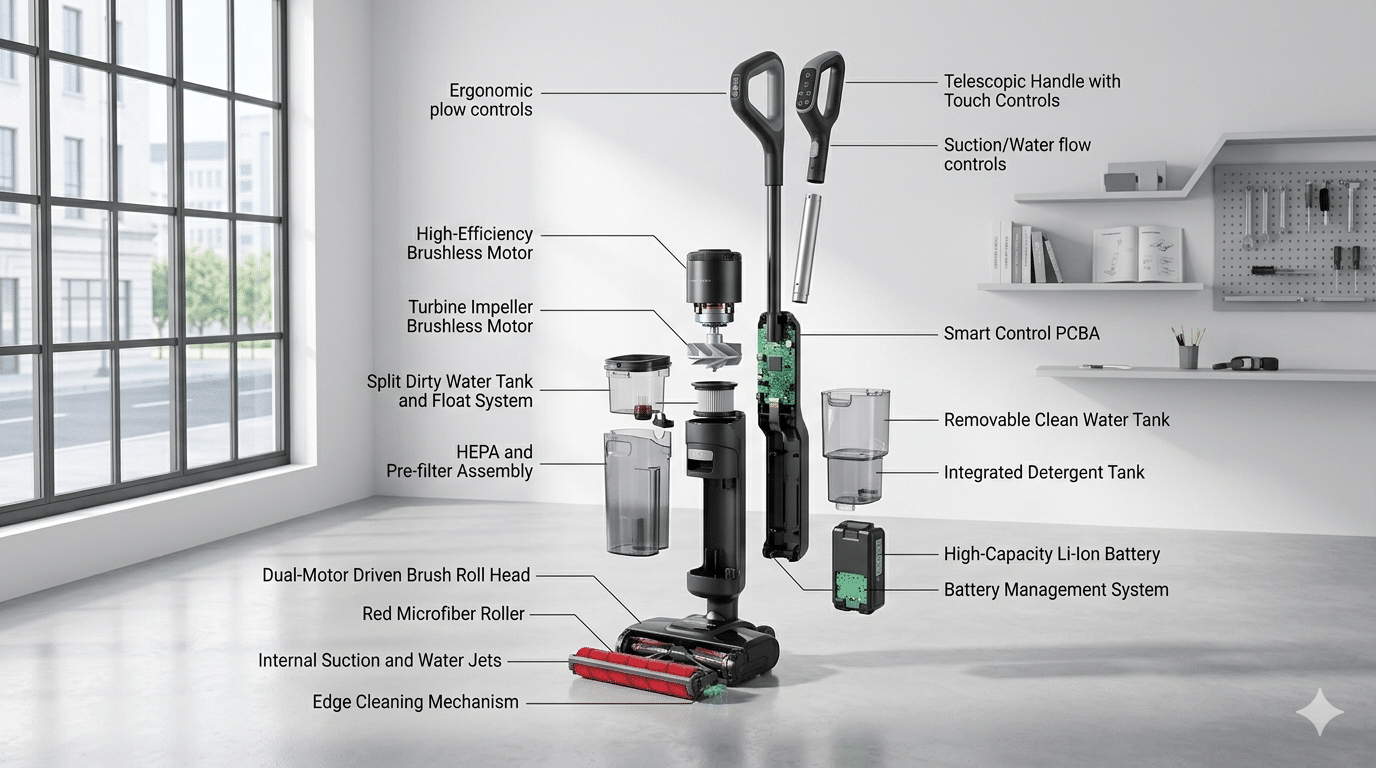
Floor-washer combos are a newer category. Think of machines like the Dyson WashG1 or Dreame H-series. These upright devices vacuum and wet-scrub your hard floors in the same pass, using a roller brush and a dual-tank system that separates clean and dirty water. They’re designed for everyday home cleaning rather than heavy-duty jobs.
Both are technically wet dry vacuums, but they serve different purposes. When most homeowners ask “what is a wet dry vacuum?”, they’re usually thinking about a traditional shop vac. This guide covers both, so you can decide which type fits your situation.
How Does a Wet Dry Vacuum Work?
The short version: a powerful motor creates suction, pulling air and debris into a waterproof tank. Because the tank is sealed and the motor is kept separate from the airflow path, water can pass through safely without shorting anything out.
That’s a big deal. With a standard vacuum, liquid gets into the filter, clogs the motor, and ruins the machine. Wet dry vacuums are engineered to handle this from the ground up.
The Science Behind Wet/Dry Suction
Most shop vacs use what’s called a bypass motor — the motor sits in a separate chamber and uses a different airflow path than the debris suction. Air and liquid enter through the hose, drop into the tank, and only clean bypass air reaches the motor. That’s how water can pour in without causing damage.
Floor-washer combos take a different approach. They use a dual-tank system: one tank holds clean water (sometimes with a cleaning solution), and a separate dirty tank collects whatever’s sucked up from the floor. The two never mix, which is why the floors stay cleaner than with a traditional mop that keeps reusing the same dirty water.
Filters, Tanks, and Float Valves
Knowing which parts do what helps you use the machine correctly:
- Cartridge filter: Used for dry mode. Traps fine dust and keeps it out of the motor. Must be removed before vacuuming liquids, or it gets soaked and clogs.
- Foam filter or sleeve: Used for wet mode. Lets water pass through to the tank while offering some motor protection.
- Float valve (or float ball): A small safety device inside the tank. When the water level gets too high, the float rises and blocks the airflow, automatically shutting off suction before water can reach the motor.
- Dual tanks (floor-washers only): One for clean water, one for dirty. Keeps your cleaning solution fresh from start to finish.
What Can You Clean With a Wet Dry Vacuum?
More than you’d expect. Here’s the practical breakdown.
Wet Messes
- Spilled drinks on hard floors or carpets
- Water from a leaking dishwasher, washing machine, or water heater
- Flooded basements or crawl spaces
- Muddy paw prints (pick up the wet mud before it dries and sets)
- Backed-up sinks or slow-draining areas
- Water left after mopping (great for drying tile floors faster)
Dry Debris
- Sawdust and wood shavings from DIY projects
- Drywall dust after renovation work
- Fireplace ash (once fully cooled)
- Pet hair from floors, upholstery, and car seats
- Dirt and leaves tracked in from outside
- Fine dust from sanding, grinding, or cutting
Creative Uses You Might Not Have Thought Of
This is where shop vacs earn their reputation. Beyond basic cleanup:
- Blower function: Most shop vacs let you reverse the hose into the exhaust port, turning the machine into a blower. Useful for clearing leaves, drying surfaces, or blowing dust out of tight spaces.
- Drain unclogging: The suction on a shop vac is strong enough to clear slow drains in sinks or bathtubs.
- Car detailing: A shop vac with a crevice tool gets into seat seams, cup holders, and under seats far better than most handheld vacuums.
- Inflating things: Some models can inflate air mattresses, pool floats, or inflatable toys when used with the right attachment.
Wet Dry Vacuum vs. Regular Vacuum: What’s the Difference?
If you’re comparing a wet dry vacuum vs a regular vacuum, here’s an honest side-by-side:
| Feature | Wet Dry Vacuum | Regular Vacuum |
|---|---|---|
| Handles liquids | Yes | No (can damage motor) |
| Tank or bag | Waterproof tank | Bag or canister (not waterproof) |
| Debris types | Wet + dry, large debris | Dry debris, typically fine particles |
| Weight | Heavier (5–15 lbs+) | Lighter (3–9 lbs typical) |
| Noise | Louder | Quieter |
| Everyday carpet use | Not ideal | Designed for it |
| Best use case | Garages, workshops, flood cleanup | Daily indoor vacuuming |
A regular vacuum is better for daily carpet and rug cleaning. A wet dry vacuum is better for everything a regular vacuum can’t touch. Most households that own a shop vac still keep a regular vacuum too.
Advantages and Disadvantages of Wet Dry Vacuums
No appliance is perfect. Here’s the honest picture.
Advantages:
- Handles both wet and dry messes with one machine
- Powerful suction tackles heavy debris regular vacuums can’t
- Built tough, typically more durable than household vacuums
- Can save money on professional water extraction after leaks or flooding
- Doubles as a blower on most models
- Great for DIYers, pet owners, and anyone with a garage or workshop
Disadvantages:
- Bulkier and heavier than standard vacuums, harder to store
- Louder operation (expect 70–85 decibels on most models)
- Higher upfront cost for a quality machine
- Ongoing filter and maintenance expenses — Market Growth Reports found 41% of potential buyers cite maintenance costs as a key barrier
- Not practical for daily carpet vacuuming in a large home
- Requires filter swaps between wet and dry use (on shop vac models)
The maintenance point is worth taking seriously. Filters need cleaning or replacing regularly, and if you vacuum wet messes without switching to the right filter setup, you can damage the cartridge filter quickly. It’s not complicated, but it does require attention.
Is a Wet Dry Vacuum Worth It?
That depends entirely on how you live.
When You Should Buy One
- You do DIY projects, woodworking, tiling, or home renovation
- You have a garage, workshop, or basement that’s prone to moisture
- You own pets that track in wet and dry messes
- You want a single machine to both vacuum and wet-mop your hard floors (look at floor-washer combos for this)
- You live somewhere with seasonal flooding, heavy rains, or a sump pump
- You regularly deal with large debris a regular vacuum can’t handle
According to Market Growth Reports, roughly 52% of wet dry vacuum demand now comes from households — it’s no longer just a workshop tool. The cordless segment alone grew 57% as more homeowners want portable options for everyday use.
When You Might Not Need One
- You live in a small apartment with no garage or workshop space
- You already have a reliable upright vacuum and a separate mop
- Your home is mostly carpeted with no major hard-floor areas
- Budget is tight and you’re not confident you’ll use it regularly enough to justify maintenance costs
If your main goal is better everyday vacuuming, a higher-quality regular vacuum is probably the smarter buy. But if you’ve ever found yourself soaking up a spill with towels or wishing you could just suck the water off the floor, a wet dry vacuum will change your life.
How to Choose the Right Wet Dry Vacuum
If you’ve decided you want one, here’s what to look at before buying:
- Tank capacity: Measured in gallons (or liters). 2–4 gallons for occasional home use, 6–12 gallons for workshops, 16+ for serious water extraction.
- Corded vs. cordless: Corded models deliver consistent, stronger suction for heavy jobs. Cordless ones are more portable but have limited runtime.
- Peak horsepower: Don’t put too much stock in peak HP (it’s a marketing number), but look for at least 3–4 peak HP for workshop use.
- Filtration: HEPA filtration is valuable if you have allergies or are cleaning fine dust like drywall or sanding particles.
- Portability: Does it have wheels? A sturdy handle? Can you carry it up stairs if needed?
- Noise level: If you’re using it indoors, check the decibel rating. Quieter models exist and are worth the premium in living spaces.
- Included attachments: Look for a crevice tool, utility nozzle, and ideally a wet floor squeegee and extension wand.
The top five manufacturers control roughly 46% of the global market, which means you have plenty of quality options across price ranges. Focus on what your specific use case requires rather than brand names.
FAQs
Can I use a wet dry vacuum on hardwood floors?
Yes, as long as the hardwood is sealed. Traditional shop vacs with a squeegee or floor nozzle can safely pick up standing water or light spills. Floor-washer combos are specifically designed for hard floor cleaning, including hardwood, but stick to low-moisture settings. Avoid using any wet vacuum on unsealed or unfinished wood.
What should I never vacuum with a wet dry vac?
Skip hot liquids (they can warp components or create steam inside the tank), flammable liquids like gasoline or paint thinner (serious fire risk), fine dry ash that’s still smoldering, and extremely sticky substances like thick mud or animal waste that will clog the hose. Broken glass should only go into industrial-rated models with heavy-duty hoses.
How do I switch between wet and dry mode?
For traditional shop vacs: remove the cartridge filter and install a foam filter sleeve before vacuuming liquids. If you skip this step, the cartridge filter gets wet and stops working properly. To go back to dry mode, let things dry out, reinstall the cartridge filter, and empty the tank. For floor-washer combos, just fill the clean water tank and select wet cleaning mode. The machine handles the rest.
Are wet dry vacuums safe for laminate floors?
Yes, with care. Floor-washer models with moisture control are generally safe on laminate when set to low-moisture mode. Traditional shop vacs can pick up water sitting on top of laminate without issue. What you want to avoid is letting liquid sit long enough to seep into the seams, which can cause warping regardless of what you use to clean it up.
Can a wet dry vacuum replace my regular vacuum?
Partly. A floor-washer combo can replace both a traditional vacuum and a mop for hard floors, and some models handle rugs too. A traditional shop vac isn’t designed for daily carpet maintenance — it’s too bulky, loud, and the filtration isn’t optimized for fine carpet dust. Most households that own a shop vac keep a regular vacuum on hand for everyday use, treating the wet dry vacuum as a specialized tool for specific jobs.
A wet dry vacuum isn’t something you’ll use every day, but when you need it — whether it’s a burst pipe at midnight, a garage covered in sawdust, or floors that need a proper deep clean — nothing else does the job. The key is knowing which type fits your life and what to realistically expect from one.


Leave a Comment
You must be logged in to post a comment.